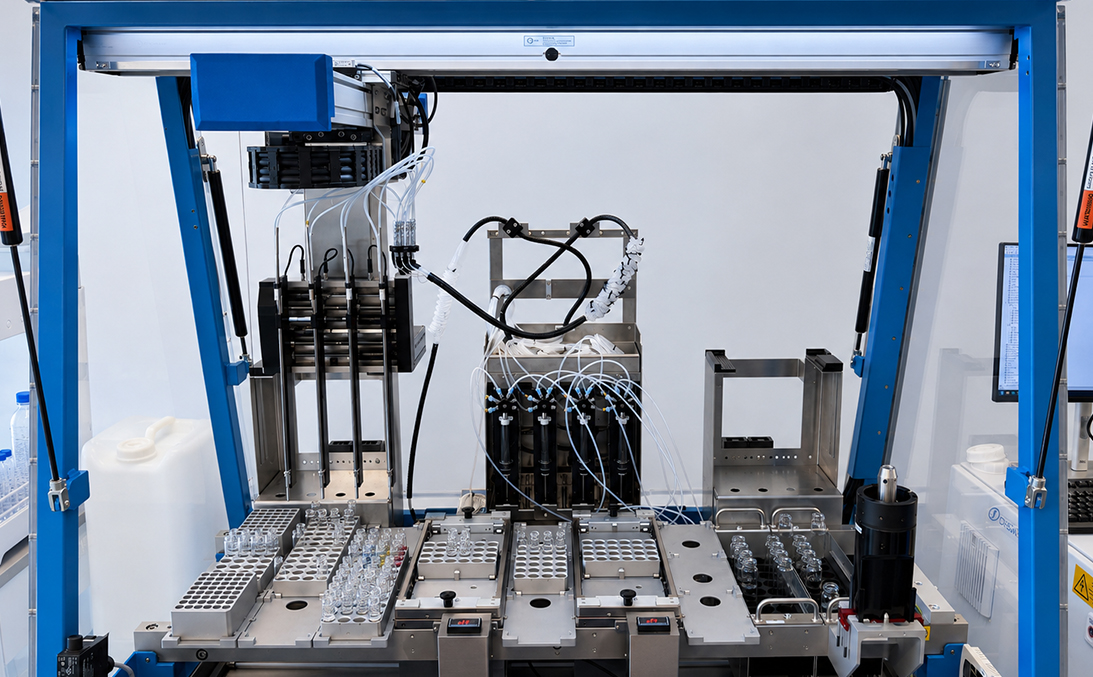


Manufacturing is undergoing a structural shift.
For decades, even highly advanced industries have relied on manual workflows, fragmented software, and paper-based systems to move parts from design to production. But as sectors such as aerospace and defense push for faster iteration, more efficient supply chains, and greater traceability, the traditional model is beginning to show cracks.
Layup Parts is building a different kind of factory. It is developing a software-defined composites manufacturing platform that combines digital tooling, workflow automation, and factory-level traceability to deliver high-performance parts with speed, flexibility, and visibility. Put simply, Layup is seeking to help modern manufacturers move beyond manual processes and toward a more responsive, connected production model.
We’re thrilled to partner with Layup as they build the digital composites factory for the next-generation industrial landscape.
Why Now?
Core manufacturing workflows like quoting, tooling design, material tracking, and production records still rely on spreadsheets and paper documents. This approach is increasingly becoming a bottleneck for critical programs and fundamentally out of step with the demands of modern industry. At the same time, emerging neoprimes like Anduril have raised the bar for product velocity. Development cycles are shorter, hardware iteration is faster, and suppliers are expected to move at software speed.
In parallel, robotics, additive manufacturing, and “the factory is the product” model together reshape expectations around how products should be built. Manufacturing is becoming software-defined, where systems are being connected, workflows digitized, and production data captured in real time. In advanced manufacturing, the software layer increasingly determines the quality, speed, and scalability of the physical output.
This shift is especially important in composites manufacturing, where many processes remain labor-intensive and dependent on skilled technicians.
Why Layup?
Layup is built around the belief that software should define how the factory operates. The company combines proprietary software with in-house composites manufacturing to automate and connect critical steps across the production lifecycle. Its platform compresses workflows such as quoting, tooling design, and ply engineering that historically take days or weeks while also creating a digital record of progress on the factory floor.
At the center is MatrixOS, Layup’s software-defined manufacturing layer. MatrixOS connects the factory floor end-to-end,enabling inventory, part, and machine traceability from order intake through final delivery. The platform will look to give internal teams real-time visibility into work orders, machine status, and production data, while providing customers with clear insight into where parts sit in the manufacturing process. By digitizing and connecting these workflows, MatrixOS expects to replace fragmented manual processes with a system built to support quality, transparency, compliance, and certification requirements.
Who’s Behind Layup?
The team behind Layup immediately stood out to us.
The three founders met at The Boring Company and bring highly complementary skillsets to Layup. Zack, CEO and Co-Founder, is an engineering and design leader in composites manufacturing. Elisa, COO and Co-Founder, brings the operational chops needed to drive the business day in and day out. Hanno, CTO and Co-Founder, translates complex customer requirements into elegant software systems that make the factory more intelligent and responsive.
Together, they bring a defining combination of manufacturing credibility, software talent, and operational rigor.
What’s Next?
Layup is entering an important next phase of growth as it expands its facility, adds manufacturing capacity, and positions the business to support higher-volume production.
As the company scales, we believe one of the biggest opportunities is to convert its speed and software advantage into long-term production relationships. With greater manufacturing capacity and a stronger digital backbone, we believe Layup will be positioned to deepen its engagement with existing customers while continuing to broaden its relationships across aerospace and defense. Additionally, Layup has a well-defined plan to automate more of its backend manufacturing processes through robotics, further increasing throughput, consistency, and operating leverage.
We’re excited to back the team as they work to modernize manufacturing and help build a more connected, responsive industrial base.


Suggested Reads